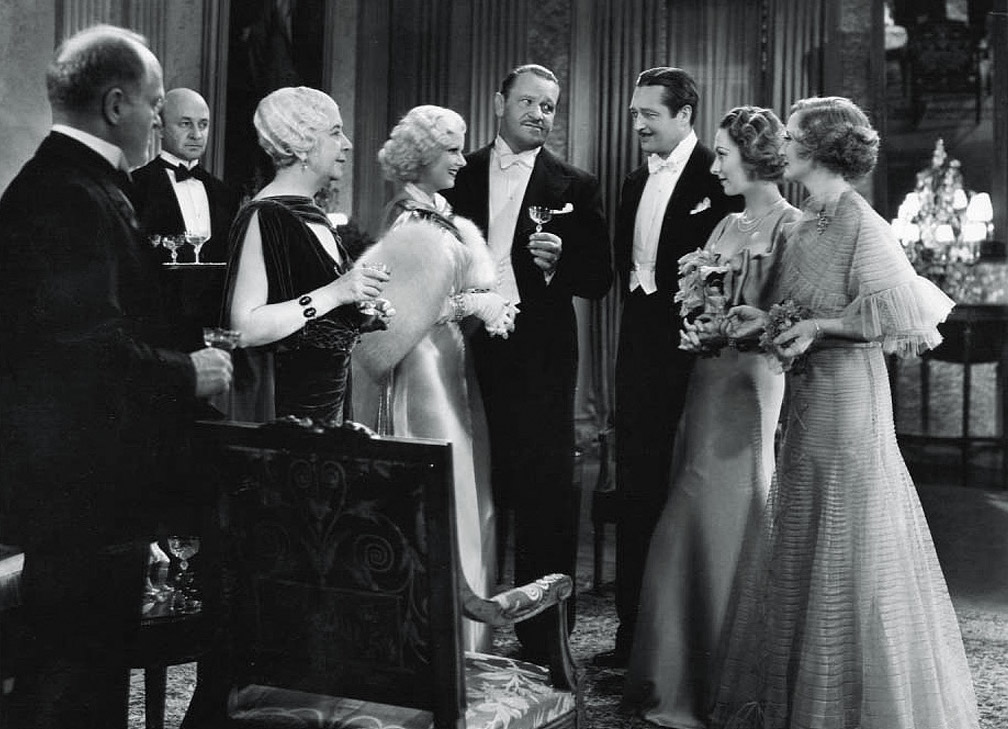
If you’ve seen Martin Scorsese’s 2004 Howard Hughes biopic The Aviator, then you’re likely somewhat familiar with this week’s pick, Hell’s Angels (Disc/Download). As a fun experiment, I decided to watch them both back-to-back, to see whether the backstage drama depicted in The Aviator resulted in a Hughes film that stands the test of time. Happily, or rather, unhappily for reasons we’ll get to later, I’m here to report it does.
The film begins with three college friends: German Karl, and two English brothers, Roy and Monte Rutledge. They think they’ve all got more carefree Oxford days ahead of them, but what none of them realize is that they’ll soon be fighting on opposite sides, both in World War I and in pursuit of the affections of a fickle young woman: a braless, flawless Jean Harlow. Roy and Monte both think they have a shot with her, but she’s only interested in having fun while she’s still alive to have it (a statement that would prove to be horribly prescient given the actress’s death from kidney failure at the age of twenty-six). Roy becomes disillusioned with love while Monte becomes disillusioned with military service, realizing too late he and his fellow fighter pilots are merely pawns for politicians and privateers. He wonders why he and his brother are putting their lives on the line in the night patrol when the people sending them to the battlefield are home safe in their beds. It’s in this skepticism of war that the movie stays current, nearly a hundred years later. I’d imagine there are a lot of military personnel and their loved ones asking this very same question right now.
I’ve been wanting to feature the Jean Harlow cocktail on Cinema Sips for a while, and Hell’s Angels is the perfect pairing because in this breakout role, Jean likes liquor, she likes men, and she’s not afraid to declare it. While watching Hell’s Angels, I recommend slipping into something more comfortable to enjoy the classic Jean Harlow cocktail.
Jean Harlow
1 ½ oz light white rum
1 ½ oz red sweet vermouth
1 dash orange bitters
Orange twist
Combine rum, vermouth, and bitters in a shaker with ice. Stir to chill, then strain into a coupe glass. Express the oils from the orange twist over the glass, then rest on the side.

Even if you think a war flick is not for you, Hell’s Angels is worth watching for its technical achievements alone. A silent film that had to be reshot for sound, it also mixes black & white footage with scenes in Multicolor processing, plus tinted frames. Not to mention the incredible (and dangerous) aerial stunts that took the lives of several pilots, and all those fluffy, precious clouds. This is a historical record of what was newly possible in cinema in the late-1920s/early-1930s, and also of what happens when one crazy guy just keeps throwing money at the problem. Cheers!