
Dramas · Holiday Films

Babygirl

Image: Babygirl, 2024

The last time I did a Dystopian Christmas series was in 2017, and back then, I featured the Stanley Kubrick film Eyes Wide Shut. I thought this would be the end of my anti-holly jolly picks, until (supposedly) seventy-seven million Americans decided they wanted Dystopia: The Sequel! So, in the spirit of “you asked for it”, I’m watching a Christmas movie for these darkest of times: Babygirl (Disc/Download).

I’ve always thought of Babygirl as the spiritual follow-up to Eyes Wide Shut. Both films take place at Christmas, both star Nicole Kidman, and both fall into the “psycho-sexual thriller” genre. But where Eyes Wide Shut features Tom Cruise gallivanting to orgies and basement jazz bars while Nicole stays home wrapping gifts, in Babygirl the tables are turned. Here, she finally gets to explore the phrase, “If you men only knew…”

As robotics exec Romy Mathis, Kidman plays a woman who seemingly has it all. Great job, two kids, a devoted husband (played by Antonio Banderas), and a fabulous selection of cashmere coats. But still, it’s not enough. She longs to explore her sexual kinks, and she does so with the hot new office intern (Harris Dickinson). I see echoes of Belle du Jour as Romy puts herself in debasing, risky situations, addicted to her secrets and powerless to stop. One can’t help but be enthralled by the chemistry Romy shares with her younger lover, but also by the tension of waiting for it all to implode.

In one particularly interesting scene, Romy shows up to the office happy hour where her paramour sends over a glass of milk. I prefer to mix that milk with some other ingredients, so while watching Babygirl, I recommend drinking the classic Tiki staple, a Rum Cow.

Rum Cow

1 oz dark Jamaican rum

½ oz simple syrup

1 ½ oz milk

Pinch of grated nutmeg

Fill a shaker 1/3 full with ice, then add rum, simple syrup, and milk. Shake to chill, then strain into a chilled coupe glass. Dust with grated nutmeg.

Babygirl definitely isn’t for everyone, but if you’re the type of person who likes psychologically fraught tales about adult relationships, you’ll probably enjoy this. Even if you’re only here for the cashmere coats and Harris Dickinson’s hotel striptease, it’ll be worth your time. Cheers!

Dramas

Gosford Park

Image: Gosford Park, 2001

As autumn finally starts to creep into my neck of the woods, I’m inspired to watch a film that celebrates rainy weather, tweed, and strong cocktails. If you’re a Downton Abbey fan, then you’ll be particularly interested in this week’s pick: Gosford Park (Disc/Download). One of the late-career masterpieces from Robert Altman, this Julian Fellowes-penned film predates the popular television show and kickstarted my love of Maggie Smith as the sassy Dowager Countess.

The 1930s British class system might seem like an unusual topic for an iconic American director to tackle, but when you watch Gosford Park, it makes total sense. Like most of Altman’s other films, it’s got a large ensemble, with scenes unfolding naturally as though the camera is just a lucky observer. What is happening in the background is just as important as whatever’s happening in the foreground, and watching the intersection of Upstairs, Downstairs, and Interloper is like a crash course in British society. Add to that an Agatha Christie-style murder mystery, and you’ve got what is probably my favorite Robert Altman film of all time.

If you’ve seen Downton Abbey, then you know what Gosford Park looks like. Women in beautiful 1930s gowns seated around a candlelit dinner table. Men in tweed suits toting their hunting rifles out into the English countryside. Cocktails and revelry among visiting American film producers and nervous social climbers. Maggie Smith yelling at a servant from the back of her Rolls Royce. It’s in ode to the beginning shots of her car traveling down a rainy country road, soft piano music playing in the background, that I selected this week’s tipple. While watching Gosford Park, I recommend drinking a classic cocktail from the Prohibition era, the Rolls Royce.

Rolls Royce

1 ½ oz London Dry gin

½ oz dry vermouth

½ oz sweet vermouth

¼ oz Bénédictine

Stir all ingredients with ice, and strain into a Nick & Nora glass.

I’m not usually a fan of Agatha Christie mysteries, however this film offers something a little different than the typical whodonit. The first half is entirely devoted to understanding the specific societal roles these characters inhabit, and how their paths intersect. By the time someone turns up with a knife in their back, you’re less interested in who than why. Gosford Park is the perfect film for a cozy night in, as you picture yourself sitting in the parlor of an English country estate, watching the drama unfold. Cheers!

Dramas

Interview with the Vampire

Image: Interview with the Vampire, 1994

Not all gothic vampire movies have to be scary. Case in point: the super campy, super queer, Interview with the Vampire (Disc/Download). It’s the kind of movie that makes you wonder how it ever got made, and also, why did we ever stop making things like this?

Based on the novel by Anne Rice, Interview with the Vampire is told from the perspective of Louis, a sensitive vampire who abhors murder. He was ushered into the dark life by Lestat, the vampire rogue who delights in the seducing and killing of humans. Brad Pitt plays Louis with all the excitement of a wet napkin, while Tom Cruise turns in perhaps the most charismatic performance of his career as Lestat. He’s funny, wild, sexy, and deserves as many sequels as the Mission Impossible franchise. I know which character I’d rather watch half a dozen iterations of, and it’s not Ethan Hunt. The movie also has the good fortune of casting lil’ miss Kirsten Dunst in the role of Claudia, a plague victim turned child vampire whom Louis and Lestat raise as their own, like one little modern vampire family. I’ll say it again: how did this get made, and why can’t we make more??

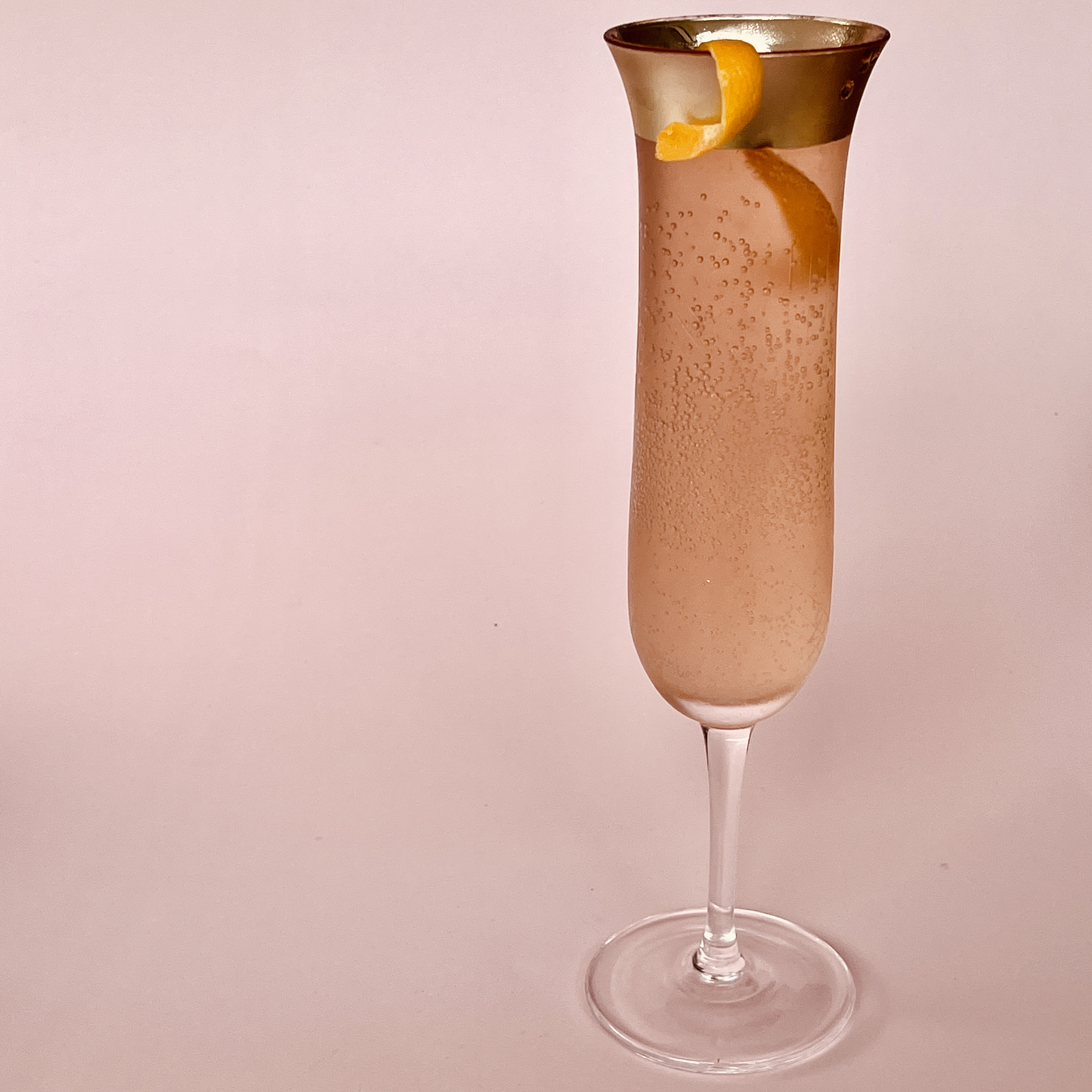
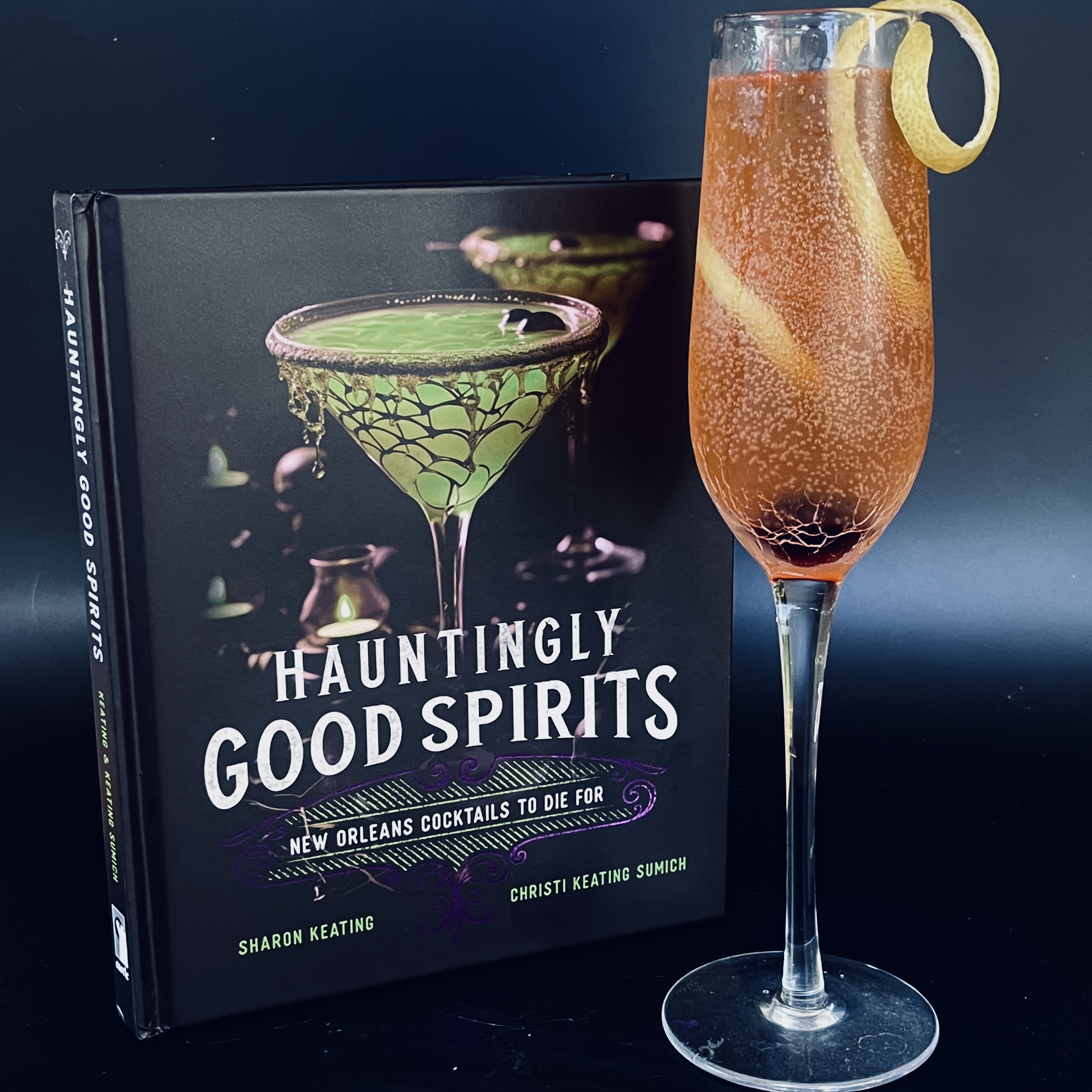
In addition to its giant stars and impressive special effects, the film also boasts incredible costume and production design. One gets the sense that we’re really seeing New Orleans at the tail end of the 18th century, and it’s remarkable how much of its style has endured into the modern day. I found a terrific cocktail book on my last visit to NOLA, which charts the supernatural lore of the city through its bars and cocktails. I chose to make a recipe from the book that felt like something Lestat would drink, right before draining an unsuspecting victim’s blood in the shadowy nook of a centuries-old bar. While watching Interview with the Vampire, I recommend drinking this Jazzy Vamp.

Jazzy Vamp (adapted from recipe in Hauntingly Good Spirits: New Orleans Cocktails to Die For by Sharon Keating and Christi Keating Sumich)

1 oz Cognac

½ oz Lemon Juice

½ oz Rose Cordial

3 oz Champagne or Prosecco

Lemon Peel and Luxardo Maraschino Cherry (garnish)

Fill a cocktail shaker with crushed ice. Add the lemon juice, cordial, and Cognac. Shake well and strain into a champagne flute. Top with champagne or prosecco, drop in a cherry, and garnish with a lemon peel.

More than anything in this film, I love how Louis thinks he’s seen his last sunrise in 1791, but thanks to the invention of moving pictures, he gets to watch them again over a century later. Whether it’s through F.W. Murnau’s Sunrise, or Robert Towne’s Tequila Sunrise, he seeks out the thing he’s been missing most, becoming a cinephile in the process. Is it weird how desperate I am to hear his review of Before Sunrise? Cheers!

Dramas

All the Real Girls

Image: All the Real Girls, 2003

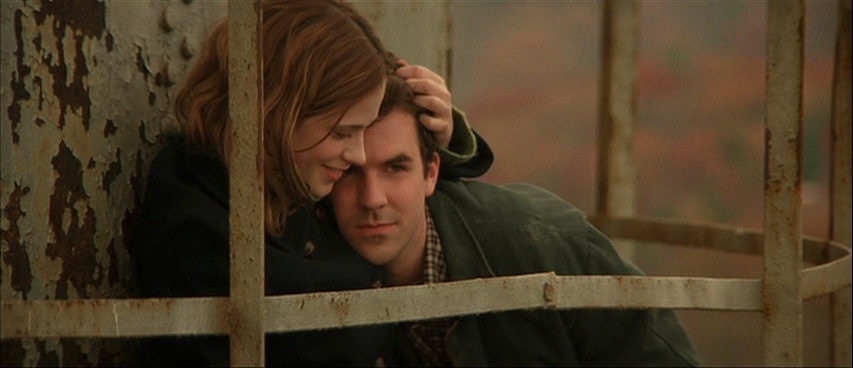
If you thought Nora Ephron had the monopoly on romance and cozy fall vibes, think again. As David Gordon Green proves with All the Real Girls (Disc/Download), you don’t need to be a wealthy Manhattanite to fall in love under the changing leaves—it can happen even in rural America.

In addition to being a great example of the stellar indie film scene of the late-90s/early-2000s, All the Real Girls marks the debut of Danny McBride, an actor I find myself inexplicably drawn to. Even though his role here is small (in typical McBride fashion, he plays a character named “Bust Ass”), it’s obvious this man was meant to be a star. Or even better: a Gemstone. This is also an early film in Zooey Deschanel’s career, defining her as a sensitive soul with big eyes, delicate mannerisms, and a pretty good North Carolina accent. Her character Noel falls for her brother’s best friend, Paul (Paul Schneider). They get together against the brother’s wishes, and although everyone assumes womanizer Paul will break her heart, it’s Noel who shatters his. The story feels real and lived in, as though it could have happened to someone you know. Or maybe it happened to you.

The characters in this movie seem to enjoy their tall boys, but watching that beautiful autumn scenery makes me want to curl up with a cozy cocktail. While watching All the Real Girls, I recommend drinking this Cinnamon Rum Old-Fashioned.

Cinnamon Rum Old-Fashioned

2 oz Aged Rum (I used Appleton 12-yr)

½ oz Cinnamon Syrup

2-3 Dashes Angostura Bitters

Orange Peel

Cinnamon Stick (garnish)

Place a large ice cube in a glass and add the rum, cinnamon syrup, and bitters. Stir gently for about twenty seconds to combine, chill, and dilute. Twist the orange peel over the glass to express the oils, then drop in. Garnish with a cinnamon stick.

I’m not sure why David Gordon Green pivoted to lowbrow comedy and horror after this movie, but I keep hoping he’ll return to the foothills of Appalachia for another romantic drama. Maybe this is as foolish as wishing fall would come to my street in Central Texas sometime before December, but a girl can dream. And in the meantime, I’ll just enjoy the changing seasons on my movie screen. Cheers!

Dramas

Alice Doesn’t Live Here Anymore

Image: Alice Doesn’t Live Here Anymore, 1974

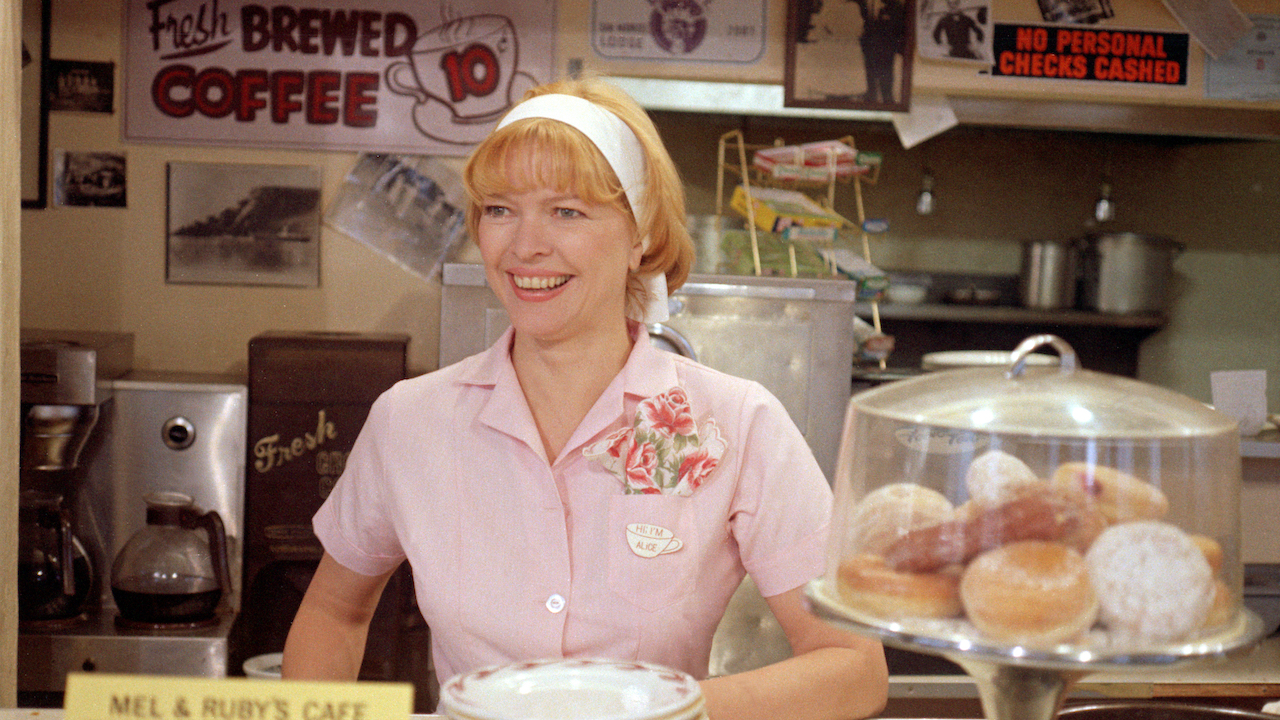
Don’t you just love a diner? The smell of pancakes, maple syrup, and coffee. The sound of a waitress asking whether you want toast or a biscuit (biscuit; always a biscuit). And most of all, a cross section of humanity, the whole place filled with hangovers and hard workers. Alice Doesn’t Live Here Anymore (Disc/Download) is a bit like the diner it depicts: quiet some times, abrasively loud at others. Let’s pour a drink and park ourselves in a comfy booth.

Martin Scorsese made this film in between Mean Streets and Taxi Driver, and although it has the realism, incredible performances, and artistic flair of those two films, Alice Doesn’t Live Here is an odd choice for a guy who would make his name in the gritty neighborhoods of New York City. This romantic drama (I use the term “romantic” loosely) follows newly widowed Alice (Ellen Burstyn) on the road to Monterey, CA with her son Tommy. Along the way, she finds a bad romance with Harvey Keitel, a good romance with Kris Kristofferson, and a job as a waitress in Tucson. It’s a far cry from her dream of being a lounge singer, but at least it’s work. Tommy starts hanging out with the local troublemaker (Jodie Foster, who I’m convinced came out of the womb sounding like a jaded middle-aged woman), and pretty soon, Monterey starts to seem like a silly childhood fantasy. They’ve already started building a better life without even realizing it.

Regarding diner food and brunch beverages, I’ve always wondered why I rarely see an espresso martini made with maple syrup. Coffee and pancakes go together pretty well, right? I tried it for myself this week, and I’m very pleased with the results. Now I just need the pancakes. While watching Alice Doesn’t Live Here Anymore, I recommend drinking this Maple Espresso Martini.

Maple Espresso Martini

2 oz Vodka

1 oz Chilled Espresso

1/2 oz Coffee Liqueur (I used Mr. Black)

1/2 oz Maple Syrup

2 dashes Black Walnut Bitters

Combine all ingredients in a shaker with ice. Shake for about thirty seconds, then strain into a coupe or martini glass.

The thing I love most about this movie is how it depicts the changing ideas of what it meant to be a woman in the 1970s. Alice is a complex character who’s forced to adapt into a society that still demeans women, yet now expects the world from them. She’s both cautionary tale and inspiration, and definitely someone I’d love to take a road trip with. Cue the Elton John. Cheers!

Dramas

Silkwood

Image credit: Silkwood, 1983

Happy Labor Day to all you Cinema Sips readers! Today, we celebrate the contributions of the American labor movement, and because I’m an elder Millennial raised on Newsies, I am very pro-labor. As workers across the country continue the fight to hold our 21st century robber barons accountable, and as nuclear energy makes a sudden comeback thanks to the regime’s inexplicable hatred of windmills (?!), there’s never been a better time to revisit Silkwood.

Watching the opening credits of this movie is like reaching into a mystery grab bag—you never know who’s going to pop up! Silkwood director Mike Nichols is someone I closely associate with smart, funny films like The Graduate, Working Girl, and The Birdcage, while screenwriter Nora Ephron is the queen of romantic comedies. Then there’s Kurt Russell as the sweet, shirtless, banjo-playing boyfriend of Meryl Streep and her unfortunate mullet. Finally, we have Cher as the lesbian roommate dating a funeral parlor beautician. This all sounds like the set-up to a comedy, and yet Silkwood is firmly in the melodramatic biopic genre. The roomies all work in a factory making nuclear fuel rods, where naturally, the conditions are terrible. Long hours, limited safety protocols, no vacation time, low pay, etc. After Karen Silkwood (Streep) is exposed to high levels of radiation and gets involved in her local labor union, she becomes someone the company wants to silence. Subjecting her to even worse conditions, and multiple “Silkwood showers” where they scrub her skin raw to remove trace amounts of radiation, Karen continues the fight until her last breath.

Most of my knowledge about nuclear energy is limited to gripping tales of meltdowns and catastrophes, like Chernobyl and Three Mile Island. Also, my husband makes ceramic glazes that look like molten nuclear waste, so the disaster narrative is heavily reinforced in our house. While you’re watching Silkwood, calm your anxiety with this Plutonium Daiquiri.

Plutonium Daiquiri

1 oz Overproof Rum

1 oz Lime Juice

¾ oz Yellow Chartreuse

¼ oz Falernum 

Combine all ingredients in a shaker with ice. Shake to chill, then strain into a Nick & Nora glass. Garnish with a dried lime wheel.

My financial advisor is convinced Uranium is about to take off, which is just one more example of America’s slow slide back to the 1950s, in all aspects of our lives. To be clear, I like the era’s dresses, houses, and movies, but the rest of it can stay in the past. As Silkwood proves: if you really want to make America great, listen to the workers. Listen to the scientists. Listen to the journalists. Don’t listen to the CEOs. Cheers!

Classic Films · Dramas

The Sandpiper

Image: The Sandpiper, 1965

Summer is in full swing, which means I’m in the mood for for melodrama at the beach. Vincente Minnelli’s The Sandpiper (Disc/Download) is a perfect choice because it features two people who defined the word “drama” in the 1960s: Elizabeth Taylor and Richard Burton.

Having abandoned their spouses to hook up with one another during the filming of Cleopatra, Burton and Taylor were already a married couple by the time they made The Sandpiper. However, that didn’t stop them from capitalizing on their reputation as scandal-plagued adulterers. They were among the most photographed celebrities of the 1960s, so whether The Sandpiper was a good movie or a bad one was of no consequence; it was always going to make money. Thankfully, the film has a lot to offer, such as beautiful Big Sur scenery, Elizabeth Taylor’s enviable beach house, forbidden love, and even Charles Bronson playing a hippie sculptor. Taylor’s character of a single mom who is single by choice was a bold stance for the time period, and even though her son is included in a long list of movie children I loathe, I enjoy the film’s feminist leanings. Liz can be an artist or a mother or whatever the hell she wants to be; men are of no consequence to her ambitions.

For all you lovers of melodrama, rest assured there is a wonderfully taboo romance between this bohemian mom and the married Episcopalian priest in charge of her son’s new boarding school. Richard Burton was the quintessential “Hot Priest” before Fleabag coined the term, so let’s celebrate him with this spicy spritz perfect for summer on the California coast. While watching The Sandpiper, I recommend drinking a Hot Priest cocktail.

Hot Priest

1 Jalapeño pepper, sliced into rounds

4 oz Rosé wine

½ oz Lime juice

2 oz Sparkling Water

In the bottom of a wine glass, muddle 1 jalapeño slice (omit if you don’t want it extra-spicy). Add ice, then pour in the Rosé and lime juice. Top with sparkling water, and garnish with 2-3 jalapeno slices.

It’s hard to imagine any movie couple surpassing the unique chemistry of Liz and Dick in The Sandpiper, not only because of their physical attractiveness, but because the audience gets to feel like they’re witnessing something secret. We’re brought into their relationship for the length of two hours, and it’s gorgeous and complicated and doomed. But oh, when it was good, it was amazing. Cheers!

Classic Films · Dramas

A Place in the Sun

Image credit: A Place in the Sun, 1951

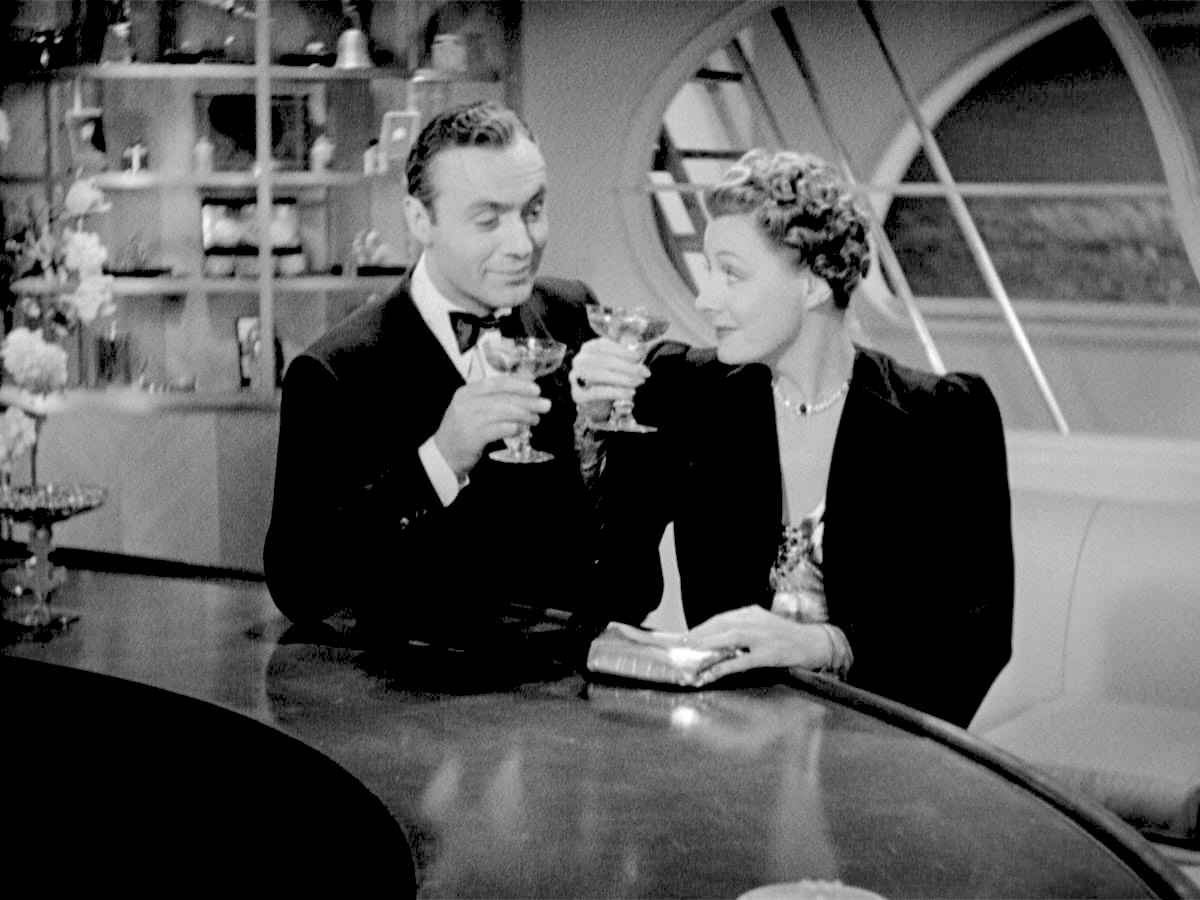
This week, I’m in the mood for beautiful gowns, retro bathing suits, a Tiki dinner party at the lake, and maybe a little murder. A Place in the Sun (Disc/Download) satisfies all these cravings, making it my perfect summer watch.

You’ve probably seen the dress designed by Edith Head and worn by Elizabeth Taylor—the one with the dozens of tiny white flowers covering the bust.

You may have also seen the funny gif of Elizabeth collapsing into a heap on her bedroom floor (director George Stevens must have had a thing about her suddenly fainting because he made her do it again in Giant). But what you might not already be familiar with is the nuanced performance turned in by Montgomery Clift, who makes us question our own ideas of right and wrong; of guilt and innocence.

George Eastman starts out with a menial job at his uncle’s bathing suit factory, determined to work hard and earn a promotion one day. But when he begins an empty affair with his poor, vulnerable co-worker (Shelley Winters) while secretly pining for wealthy socialite Angela Vickers (Elizabeth Taylor), he loses a bit of our sympathy. And yet… there’s a part of me that just wants Shelley to go away so he can be with the dazzling one. And boy, does Elizabeth dazzle, with her eyelashes and her gowns and her speedboats. The director often shoots her in close-up, and it has a hypnotizing effect on the audience. We would do anything to see more of her; of course George would feel the same.

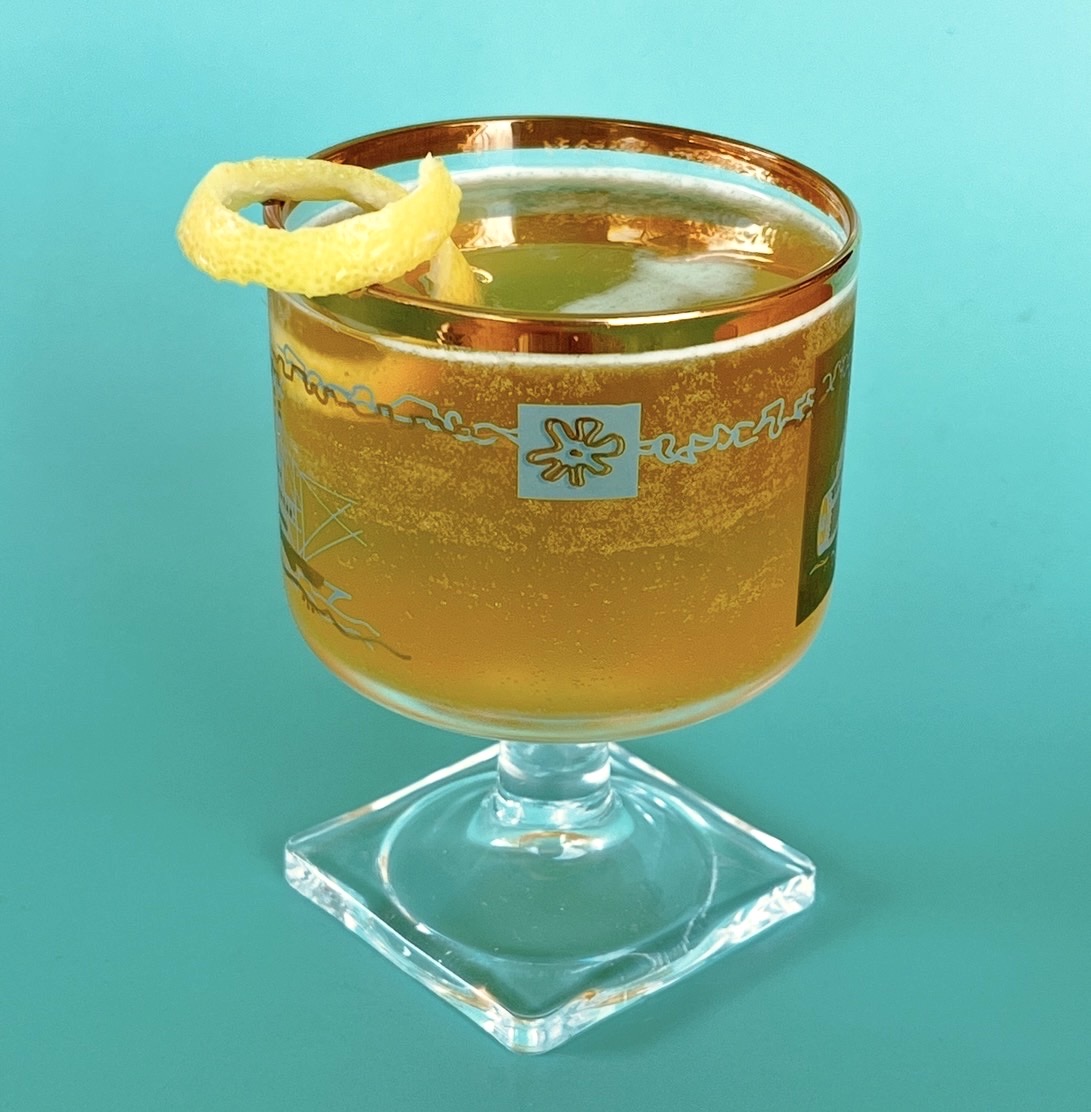
I knew this was probably a champagne movie, and definitely a martini movie, but I didn’t realize it’s also a Tiki movie! It makes perfect sense the wealthy family in this would throw a Polynesian-inspired dinner party, as the film was made during the height of the South Seas craze. Complete with leis and pineapple serving bowls and a live steel guitar player, it’s like the characters all decamped to Trader Vic’s for the night. Let’s celebrate this fabulous turn with a Tiki variation on the Vesper martini. While watching A Place in the Sun, I recommend drinking a Loon.

Loon

2 oz London Dry Gin

¼ oz Cocchi Americano

¼ oz PAMA Pomegranate Liqueur

Stir all ingredients together in a shaker with ice, and strain into a coupe glass. Garnish with a twist of lemon and a flower.

The novel this film is based on is titled An American Tragedy, and indeed the film is a tragedy, despite its wistful title change. It declares that the one making the bathing suits will never be the one wearing the bathing suits; that the American Dream is a myth for so many. Seventy-four years later, we’re still following the same old script.

Dramas

Chaplin

Image credit: Chaplin, 1992

When times are tough, something that keeps me going is my connection to fellow cinephiles. One way I’ve made these connections is through the terrific film zine Moviejawn, where I’ve been a contributor for the past eight years. The latest issue is all about silent cinema, and in it, I confess my secret shame: until recently, I’d never watched a Chaplin film all the way through. How is this possible, you ask? Well, turns out you can fake it pretty well if you’ve watched this week’s Cinema Sips pick, Richard Attenborough’s Chaplin (Disc/Download).

Biopics are one of my favorite film genres, and having recently eschewed political podcasts in favor of dishy celebrity memoirs, I find myself craving more insight about how great films were made, and in particular, what was happening in a star’s personal life during the process. Chaplin ticks all the boxes: talented actor who sort of looks like the celebrity he’s playing (Robert Downey Jr.), recreation of classic film sets (The Gold Rush, The Great Dictator, etc.), outside forces trying to squash the star’s light (ugh, HUAC), terrific supporting cast playing real icons (Kevin Kline as Douglas Fairbanks!!!), and laughably bad old-age makeup and hair. The best biopics understand they’re not going to squeeze everything in, so instead they attempt to paint the broad strokes of a person’s life, getting to the essence of what made them so successful. Attenborough does this incredibly well, taking us from Chaplin’s Dickensian roots in a British work house, to the vaudeville stage, to America, to California, to his exile in Switzerland, and finally, to his triumphant return at the 1972 Academy Awards ceremony. Some scenes are sped up to mimic the frame rate of the silent films they pay homage to, and this helps the movie move at a satisfying clip. We don’t need to see everything; just the highlights and a few Keystone Cops bits.

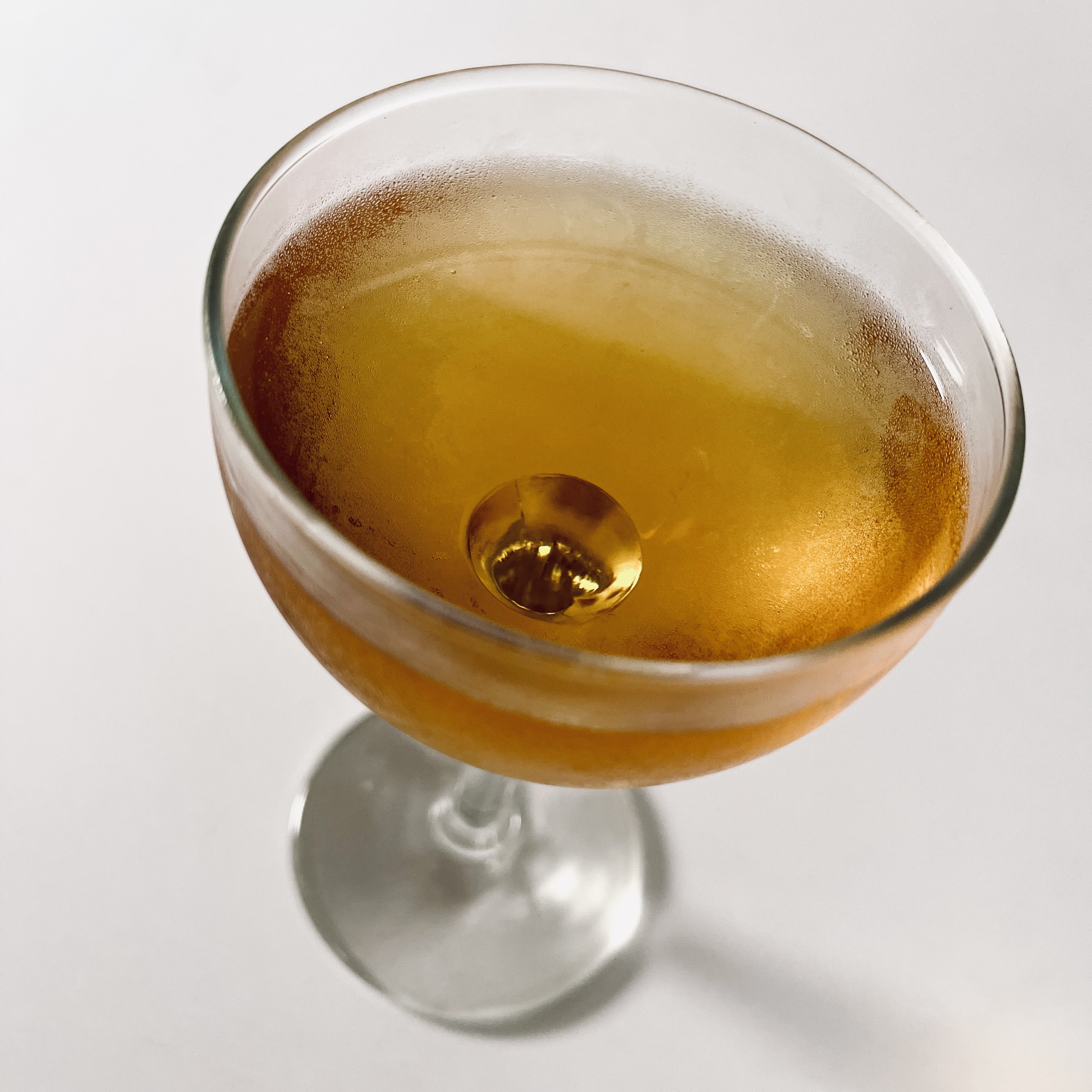
The film I discuss in the most recent issue of Moviejawn is City Lights, and given it’s my first foray into the world of Charlie Chaplin, it feels appropriate to celebrate him with the classic cocktail that bears his name. I’ll share it here for my Cinema Sips readers, because it’s also a great one to try while you’re watching Attenborough’s Chaplin.

Chaplin

1 oz Sloe Gin

1 oz Apricot Liqueur

1 oz Lime Juice

Dried lime wheel (garnish)

Combine first three ingredients in a shaker with ice. Shake to chill, then strain into a coupe glass. Garnish with dried lime wheel.

I was surprised by how relevant Charlie Chaplin’s story continues to be today, along with his films. The silent comedian tackled themes of income inequality, authoritarianism, automation, immigration, xenophobia, etc., so it’s no wonder he was a target for a government hell bent on squashing anybody who dared speak out against America’s rotten core. Even more than a story of a flawed man, Chaplin is the story of a flawed country. But the one thing he knew, and the thing that Moviejawn continues to prove again and again, is how wonderfully films can unite us. Even in silence, we can hear each other calling out. Cheers!

*If you’re interested in subscribing to Moviejawn, details can be found here. I also highly recommend the spring issue’s accompanying Silence Please! vinyl record, perfect for immersing yourself in the silent cinema experience!

Dramas

Before Night Falls

Image credit: Before Night Falls, 2000

This week’s film Before Night Falls (Disc/Download) is one I’ve wanted to feature for a long time, but could somehow never find the words. Happily, a recent cocktail discovery spurred me on, with delicious results. I don’t claim to possess even a fraction of the writing talent of Reinaldo Arenas, but I’ll do my best to share why I think this is a great movie to watch right now.

If you assume the average viewer couldn’t possibly have anything in common with a politically-oppressed Cuban poet, then you’re in for a surprise. Director Julian Schnabel makes Reinaldo’s story very accessible, perfectly capturing the tiny, beautiful moments that make up a person’s life. He could be anyone with a particular talent or dream, stuck in a time and place that wants to smother that dream. More than “gay”, or “Cuban”, or “immigrant”, or “AIDS patient”, or any of the labels placed upon him, he is an artist. A human. Stunningly photographed, expertly acted by Javier Bardem, this biopic is a reminder that art is the greatest resistance we have. That even in the most oppressive societies, words have power.

The sad fact that Arenas never lived long enough to be an “old Cuban” makes this drink bittersweet. Still, it’s a great variation on the flavors of a Mojito and feels like a celebration of the Reinaldo of the early 1960s, hunched over a typewriter, finding his voice. While watching Before Night Falls, I recommend drinking an Old Cuban.

Old Cuban

 1 ½ oz Aged Rum

¾ oz Lime Juice

1 oz Mint Simple Syrup

2 Dashes Angostura Bitters

2 oz Dry Champagne

Dried Lime Wheel (garnish)

Combine rum, lime juice, mint simple syrup, and bitters in a shaker with ice. Shake to chill, then strain into a coupe glass. Top with Champagne, and stir gently with a barspoon. Garnish with a dried lime wheel.

Before Night Falls launched Javier Bardem’s career in America, and it also introduced the words of Reinaldo Arenas to a new generation. I remember watching it as a high school student and immediately running out to buy one of his books. The poetry of his language is unforgettable and cinematic, and the film is a fitting tribute to a talent that defies labels or borders. Cheers!