Classic Films · Musicals

Cabaret

Image: Cabaret, 1972

Every June, July, and August, The Paramount Theatre in Austin, TX does three months of revival programming and cranks their air conditioning down. Waaaaaaay down. Just like a rouged Joel Grey and his beautiful orchestra, my Summer Classic Film Series went out on a high note with 1972’s Cabaret (Disc/Download). A perfect finale to a season of stellar cinema, this musical masterpiece mirrors the joy and inclusivity of my favorite movie theater, as well as the frighting world outside its doors.

I’m a big fan of Bob Fosse as film director, and his trademark elements of sexy dance numbers, quick editing, and dreamy cinematography are a perfect match for this tale of the final hedonistic days of the Weimar Republic. Part of what makes Cabaret so emotionally engaging is that the audience understands what’s coming, even when the characters don’t. We know the slow creep of fascism is headed for Berlin, just as we know the days of public and private freedoms are numbered. Cabaret is proof that there have always been people who don’t conform to the traditional ideas of gender and sexuality, there have always been artists and intellectuals who push boundaries, and they will continue to exist, no matter how hard the intolerant try to erase them.

In the care of Fosse, this film often feels like a hallucination. Joel Grey floats through Berlin’s Kit Kat Klub like a nimble sprite welcoming us to the land of “anything goes”. Liza Minnelli as Sally Bowles sings her heart out, staring off into her own version of Oz, allowing the audience to feel like part of this hopeful dream. Let’s toast this magical place with a cocktail similar to one I enjoyed at the Paramount, the Poet’s Dream.

Poet’s Dream

1 oz Gin

1 oz Dry Vermouth

½ oz Bénédictine

2 dashes Orange Bitters

Lemon twist

Combine gin, vermouth, Bénédictine, and bitters in a shaker with ice. Stir to chill, then strain into a Nick & Nora glass. Garnish with a lemon twist.

Like its twenty-first century audience, the characters of Cabaret all seem to be hurtling toward a violent, uncertain end. We don’t know what will become of Sally, the Master of Ceremonies, and the Kit Kat Klub. We don’t know if Brian will be safe in England once the bombing starts. We don’t know if Fritz and Natalia will be sent to a concentration camp. And maybe that’s why Cabaret feels like such an essential film for these times. It’s a rallying cry to live it up while we can because nobody knows what the future holds. Cheers!


Dramas

Memento

Image credit: Memento, 2000

I don’t often think about how memory impacts my movie consumption, but this week’s pick Memento (Disc/Download) has brought it to the forefront of my mind. A film I saw twice in the theater during its initial release, but never again in all the years after, I thought I remembered its twists and turns. I thought I remembered the ending. I thought I knew who the good and bad guys were, but I was totally wrong. Turns out, when it comes to this movie, I have amnesia.

Christopher Nolan’s breakthrough film about a vengeful man who has lost his short-term memory asks a lot of its audience. It assumes we’re able to follow as the story is told out of sequence: backward in the color scenes, forward in the black & white scenes, with tattoos and injuries appearing in reverse, their causes unknown. If you make it through with even a vague understanding of the plot, then you might feel pretty smart. Maybe that’s why I liked it so much as a teen and still do now: Memento issues a challenge, and I enjoy being challenged. Technically a neo-noir, the film follows Guy Pearce’s Leonard as he searches for the man he thinks raped and murdered his wife. Characters come into his life (Carrie-Anne Moss, Joe Pantoliano), and you’re never sure if they’re heroes or villains. Ultimately, the whole world seems to be taking advantage of Leonard’s condition, even Leonard himself. There are things he doesn’t want to remember, and it’s easier to move forward if everything beyond the previous five minutes is a black hole.

The story takes place where most of the great noirs have thrived, in the seedy underbelly of Los Angeles. Lenny’s world is one of cheap motels, dive bars, and abandoned buildings, with keys to rooms and cars he doesn’t remember. Maybe you’ve had a night of heavy drinking where things got fuzzy after a certain point, or maybe you’re looking for one today. While watching Memento, I recommend drinking this Memory Loss cocktail.

Memory Loss

2 oz Rye

½ oz Fernet Branca

½ oz Bénédictine

1 barspoon Maraschino Liqueur

Orange Bitters

Dried Orange Slice

Combine rye, Fernet Branca, Bénédictine, Maraschino Liqueur, and bitters in a shaker with ice. Stir to chill, then strain into a glass filled with one large ice cube. Garnish with a dried orange slice.

Nolan would go on to have the kind of career most filmmakers dream of, delivering hit after hit both critically and commercially. He’s often played with our perception of reality and time, in films like The Prestige, Interstellar, Inception, etc., and in some ways, Memento seems like the forgotten film of his oeuvre . It’s gotten overshadowed, fading from our memories like one of Leonard’s Polaroids shot in reverse. Personally, I may have forgotten the plot, but I’ve never forgotten the unsettled way it makes me feel. Cheers!

Action/Adventure/Heist · Classic Films

The Flight of the Phoenix

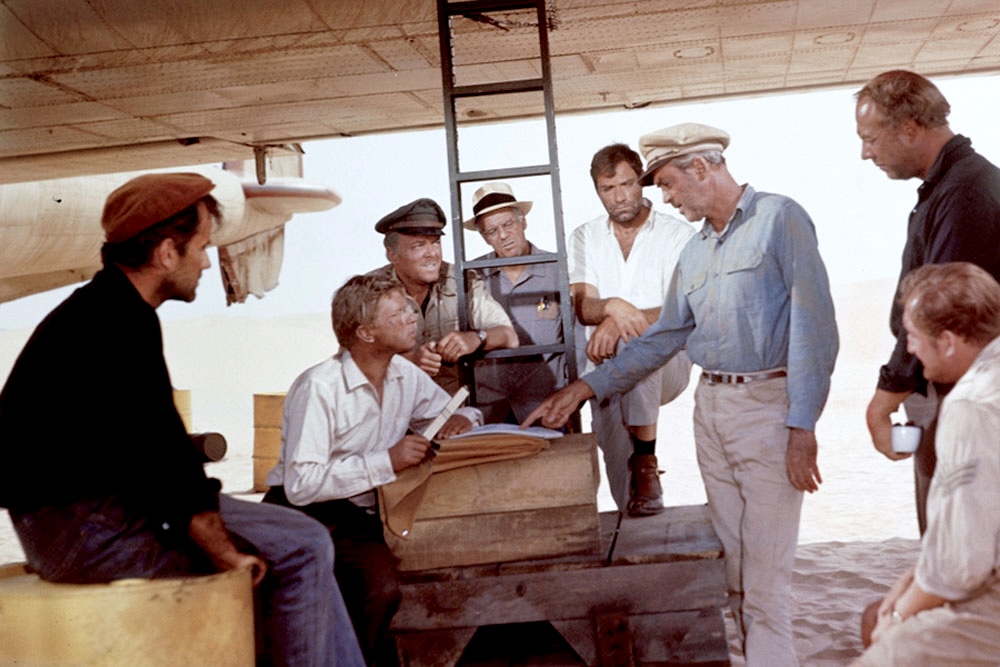
Completing my month of “Desert Movies” (a theme I never imagined I’d tackle, but stumbled into and embraced): a Jimmy Stewart classic that was new to me, The Flight of the Phoenix (Disc/Download). Featuring a terrific opening credits sequence that’s equal parts cheesy and thrilling, this movie’s tone is all over the place. But like that busted old plane, it comes together in the end.

Serving as a bridge between ensemble war dramas of the 1950s and the disaster flicks of the 1970s, The Flight of the Phoenix features a seemingly incongruous cast but takes itself seriously enough that you wouldn’t put it in the same category as say, The Towering Inferno. It’s Classic Hollywood (Jimmy Stewart, Ernest Borgnine, Richard Attenborough)-meets-New Hollywood (Peter Finch, Ian Bannen, etc.). It’s a pilot from an analog era crash-landing with an engineer from the emerging digital age. Through these contradictions, the film stays interesting and engaging, even when the scenery doesn’t change a whole lot. We’re there for the acting and the script, not the desert vistas and sunburns. Admittedly, things drag a bit in the middle as the crash survivors attempt to turn the scraps of their old plane into something flyable (before dying of dehydration or getting killed by Libyans), but the exciting climax makes the wait worthwhile. That, and the terrific Connie Francis song “Senza Fine” that’s so out of place, yet incredibly welcome.

Before the plane crashes, the passengers and crew are both getting a little wild with the booze. Ouzo is the drink of choice in the main cabin, while Dickie Attenborough is imbibing something else on the flight deck. I found a great recipe for a classic cocktail that uses Old Tom gin, which very well could have been in his bottle, and my garnish is a Medjool date because that’s all the food these poor men had. Just… dates. While watching The Flight of the Phoenix, I recommend drinking a Phoenix cocktail.

Phoenix

1 1/2 oz Old Tom Gin

1/8 oz Bénédictine

2-3 dashes Orange Bitters

Orange Twist

Medjool Date

Combine gin, Bénédictine, and bitters in a shaker filled with ice. Stir to combine and chill, then strain into a Nick & Nora glass. Garnish with a twist of orange, and a skewered date.

It’s thrilling to watch Jimmy Stewart in the cockpit, given his decorated career as a military pilot during WWII. You get the sense that he truly loved filming these scenes, and he looks totally at home even when flying a scabbed together piece of fuselage. Yes, Jimmy’s a great actor, but he’s even better when the real hero inside of him shines through. Cheers!